The label figure and your total are different
Per 100 g or 100 ml compares the same amount of two similar products. It does not tell you the total in bottles or portions of different sizes.
To find your total: label figure × amount you have ÷ 100. Use g for food or ml for a drink, matching the label.
Which drink contains more sugar?
These are fictional drink labels. Compare the sugars per 100 ml, then work out the sugars in the whole drink.
Berry juice and berry-flavoured water
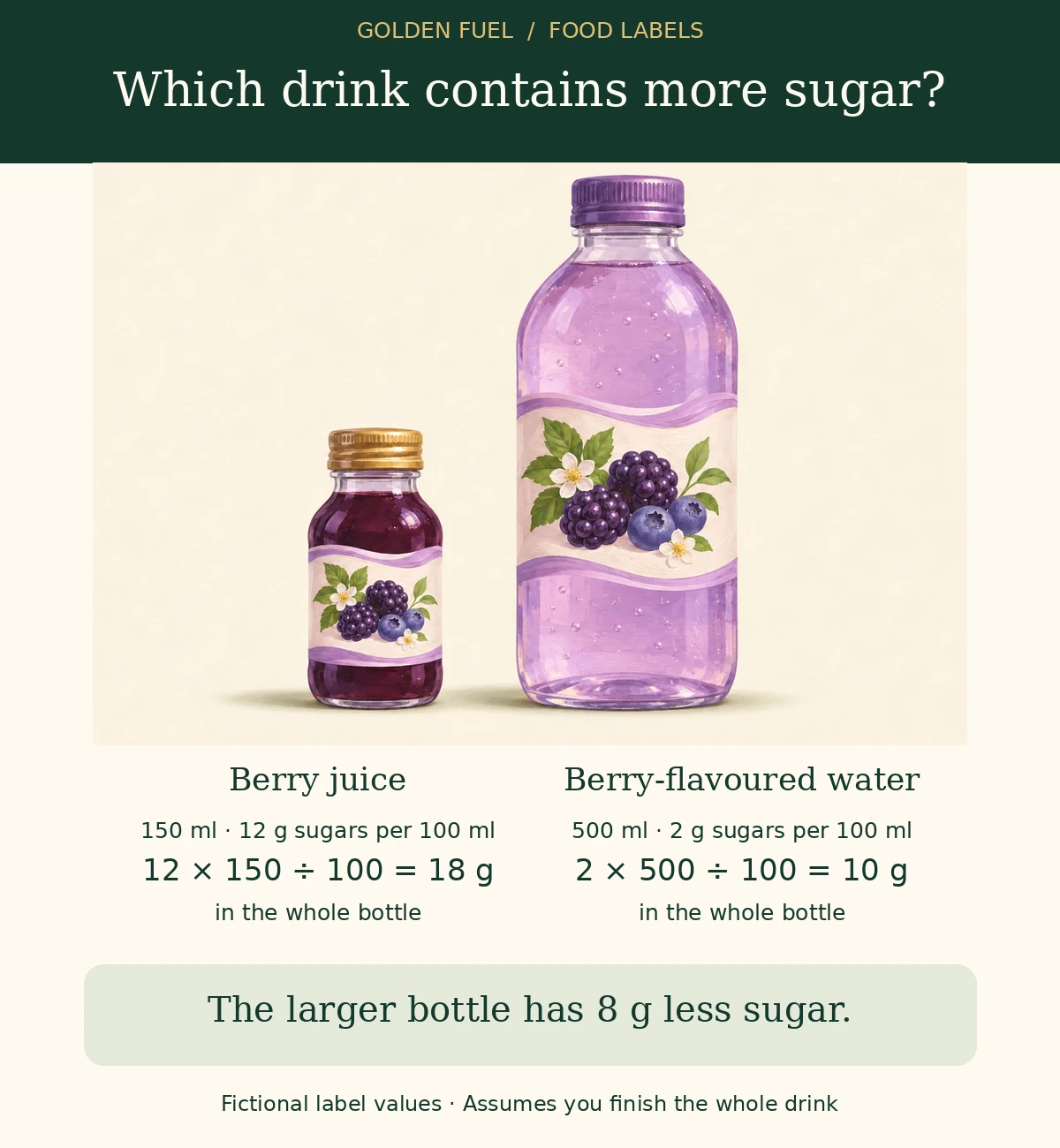
The larger bottle has 8 g less sugar. The 150 ml berry juice contains 18 g, and the 500 ml berry-flavoured water contains 10 g.
Pineapple juice and apple spritz

The larger bottle has 5 g more sugar. The 200 ml pineapple carton contains 20 g, and the 500 ml apple spritz contains 25 g.
Only drinking part of the bottle?
Use the amount you actually drink. With 250 ml of apple spritz, the calculation is 5 × 250 ÷ 100 = 12.5 g sugars.
Which portion gives you more fibre?
Compare the label per 100 g, then account for the portion you eat.
Bread rolls of the same weight
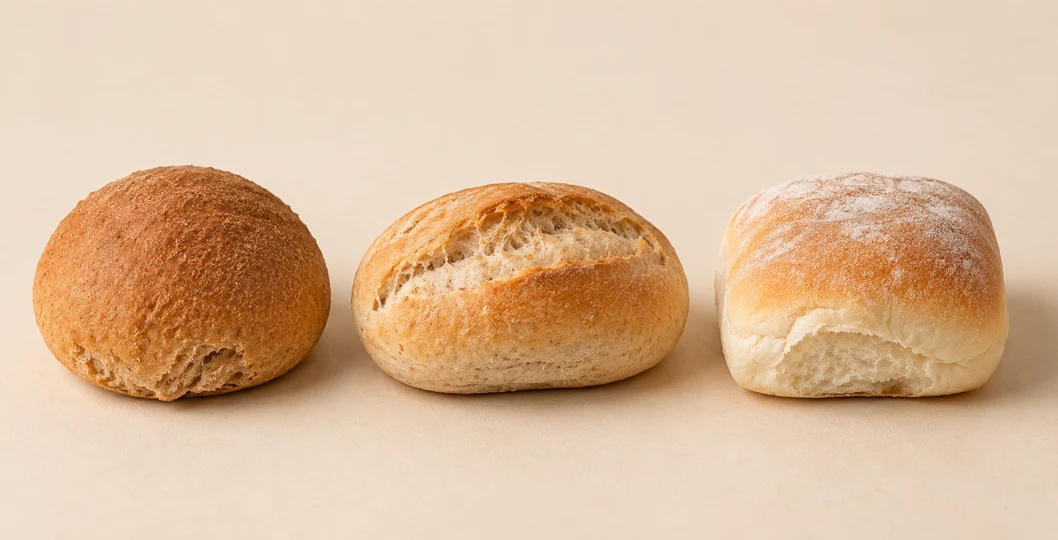
7 g fibre per 100 g · 50 g roll
7 × 50 ÷ 100 = 3.5 g fibre
5 g fibre per 100 g · 50 g roll
5 × 50 ÷ 100 = 2.5 g fibre
3 g fibre per 100 g · 50 g roll
3 × 50 ÷ 100 = 1.5 g fibre
At 50 g each, the wholemeal roll gives the most fibre.
Pasta portions of different weights
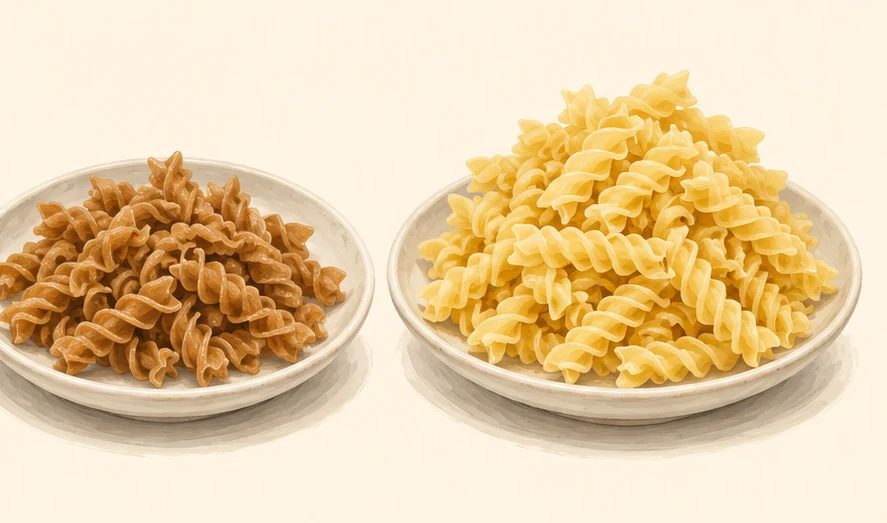
8 g fibre per 100 g · 40 g dry
8 × 40 ÷ 100 = 3.2 g fibre
4 g fibre per 100 g · 90 g dry
4 × 90 ÷ 100 = 3.6 g fibre
In this example, the larger white pasta portion gives more fibre.
These fictional label values and weights illustrate the calculation. Both pasta portions are weighed dry.
Keep sugars and carbohydrate separate
“Of which sugars” is already part of the carbohydrate total. Do not add the sugars on again. Label sugars are total sugars; they do not tell you exactly how much is free sugars.
Work out a different bottle or portion
Read the amount per 100 g or 100 ml, enter the amount you will actually have, and calculate each product separately.
The calculator uses your label figures and rounds to two decimal places. Your entries are not saved or sent. It does not assess your personal dietary needs.
Other things to check on the packet
- Compare similar foods: use their per-100-g or per-100-ml figures, then check your own portion.
- Allergens: check the highlighted ingredients even if the nutrition figures look suitable.
- Preparation: check whether the numbers are for food as sold, drained or prepared. Dry and cooked rice have different weights.
- Traffic lights: give a quick guide to fat, saturates, total sugars and salt. Drinks use different criteria from solid food.
- Sugar and reference intakes: label sugars are total sugars, not just free sugars. The adult reference of 90 g total sugars is different from the adult limit of 30 g free sugars a day.
High and low guide figures for food
These are per 100 g of food, not drink thresholds or amounts for a whole pack.
- Salt: low is 0.3 g or less; high is more than 1.5 g.
- Total sugars: low is 5 g or less; high is more than 22.5 g.
- Saturates: low is 1.5 g or less; high is more than 5 g.
Drinks use different criteria. Front-of-pack traffic-light colours can also take portion amounts into account. Read the actual panel and use the NHS guidance below.
Which convenience foods are useful?
Plain frozen vegetables, chopped onion, garlic or ginger, tinned pulses, wholemeal bread and passata can save preparation. Check the ingredients, salt and any listed fibre.
Some sauces, stock cubes and ready meals contain a lot of salt or added sugars. Compare similar products, check figures for the food as prepared where stated, and calculate what you use. Processing alone does not tell you the nutrition content. Missing fibre information is not zero.
General information. Scope and personal advice.
Checking vegetarian and vegan choices
Vegetarian: avoid meat and fish; check cheese, stock, sauces and ingredients such as gelatine. Vegan: also exclude animal ingredients such as milk, eggs and honey. Check the full ingredient list or a clear suitability statement on the actual pack.
Plant-based wording does not tell you the salt, saturated fat, fibre or protein content. Compare the nutrition figures and the amount you will eat. For plant drinks and yoghurts, check whether calcium and B12 are added.
A vegan label is not an allergy-safety guarantee. Read allergen and “may contain” information separately; animal allergens can be present through cross-contact.