From your morning oats to a bowl of colourful berries, fibre comes in different forms. Discover what it is, where to find it and how to add a little more to your everyday meals.
For signed-in members with an active paid membership. Your log is saved in this browser on this device.
THE BASICS
What is fibre?
Dietary fibre is a group of substances in plant foods that our digestive enzymes cannot fully break down in the small intestine. Fibre reaches the large intestine, where some types can be used by gut microbes; other fibre passes through largely unchanged.
Cellulose is one type of fibre. It helps give plant cells their structure. It is found in the cell walls throughout plant foods, including the skin of a grape. Fibre is more than cellulose: plants contain several other kinds too.
A CLOSER LOOK
Plant fibre, from plate to microscope
Cell walls are part of the structure of the plants we eat.
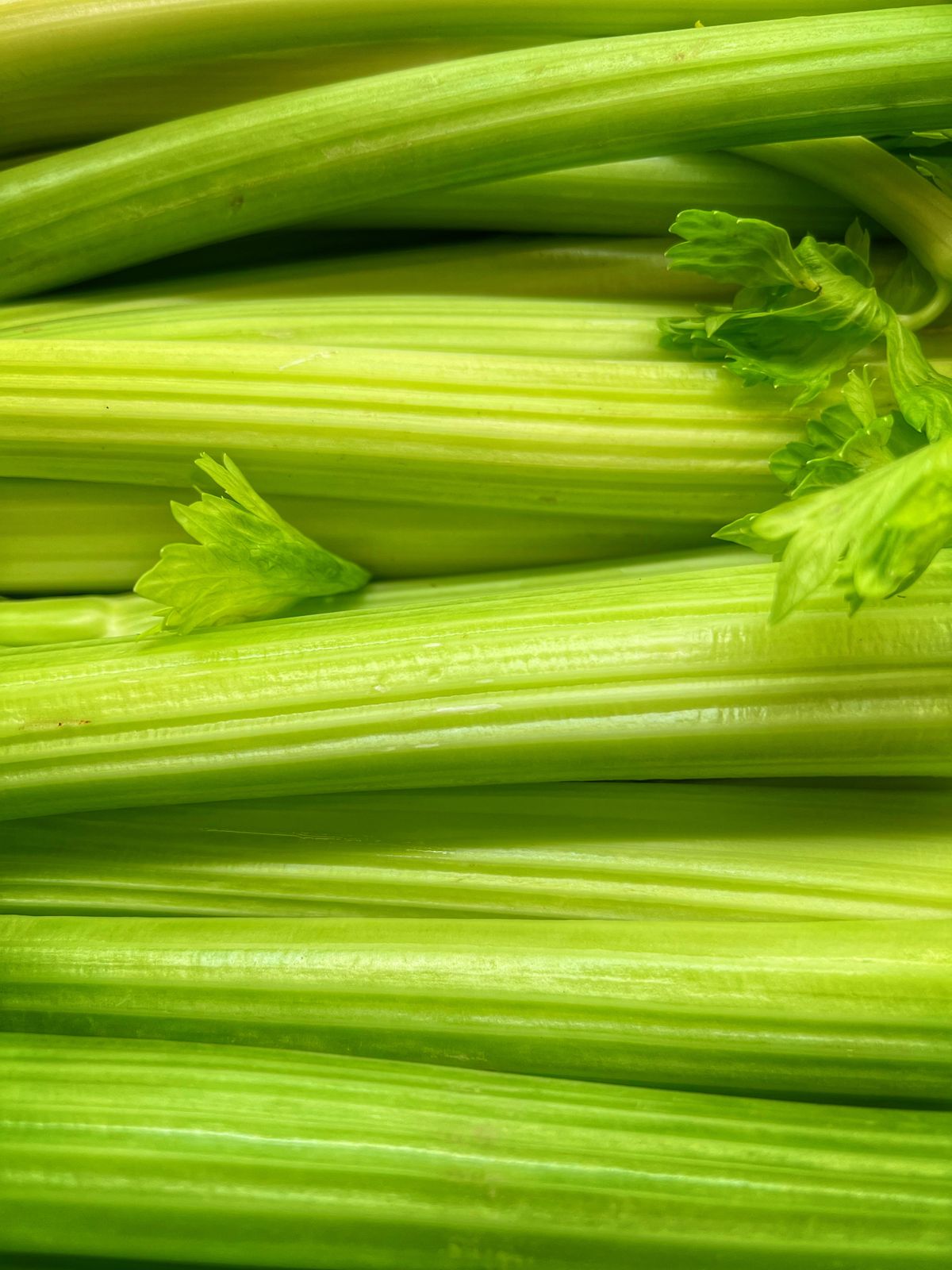
Celery: a familiar example
Snap a celery stalk and you may notice its strings. These are bundles of plant tissue containing many cells.
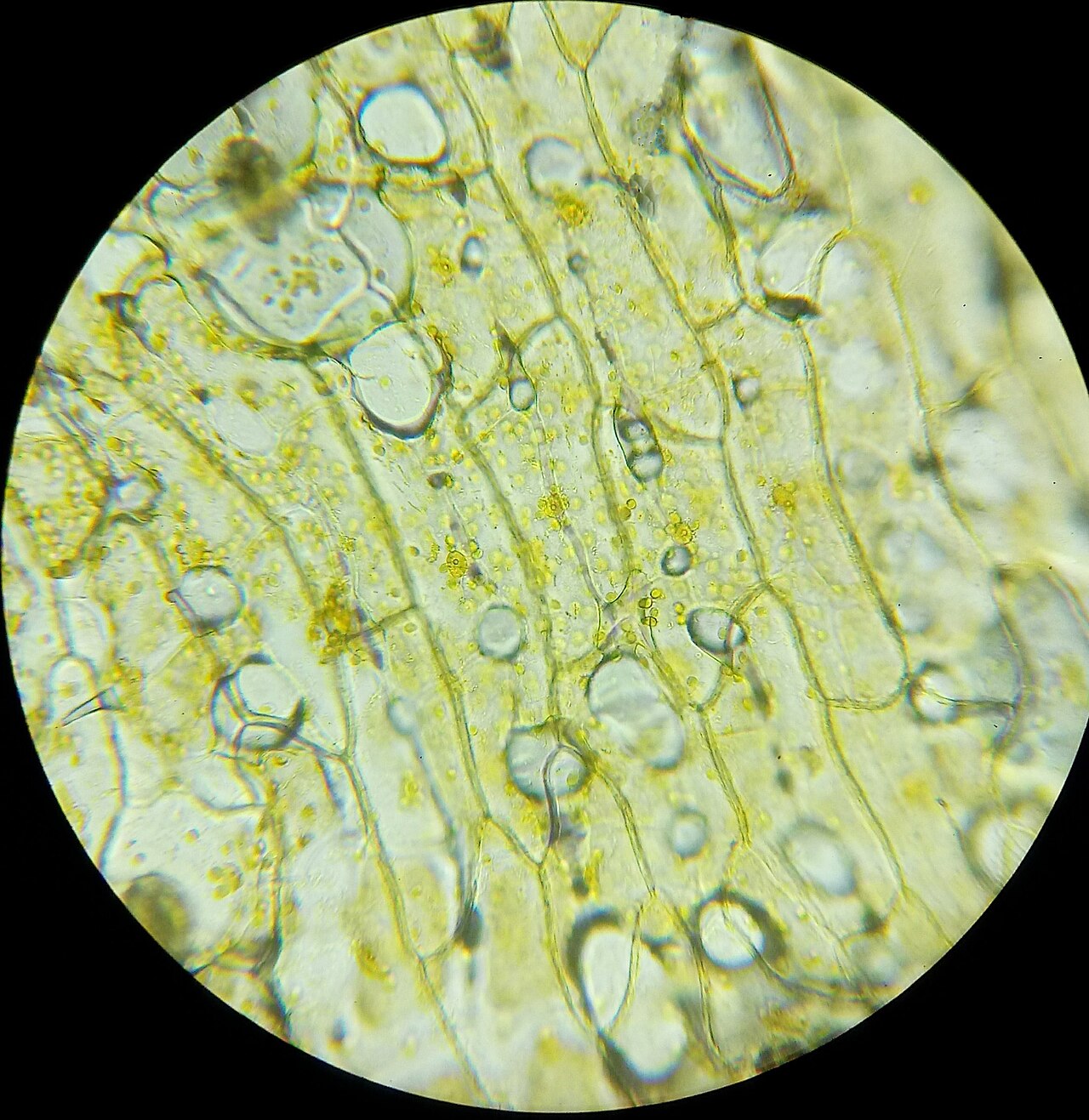
Closer still: celery cells
This microscope photograph shows individual cells. Cell walls contain cellulose; an individual wall is too small to identify with the naked eye.
Grape skins and flesh
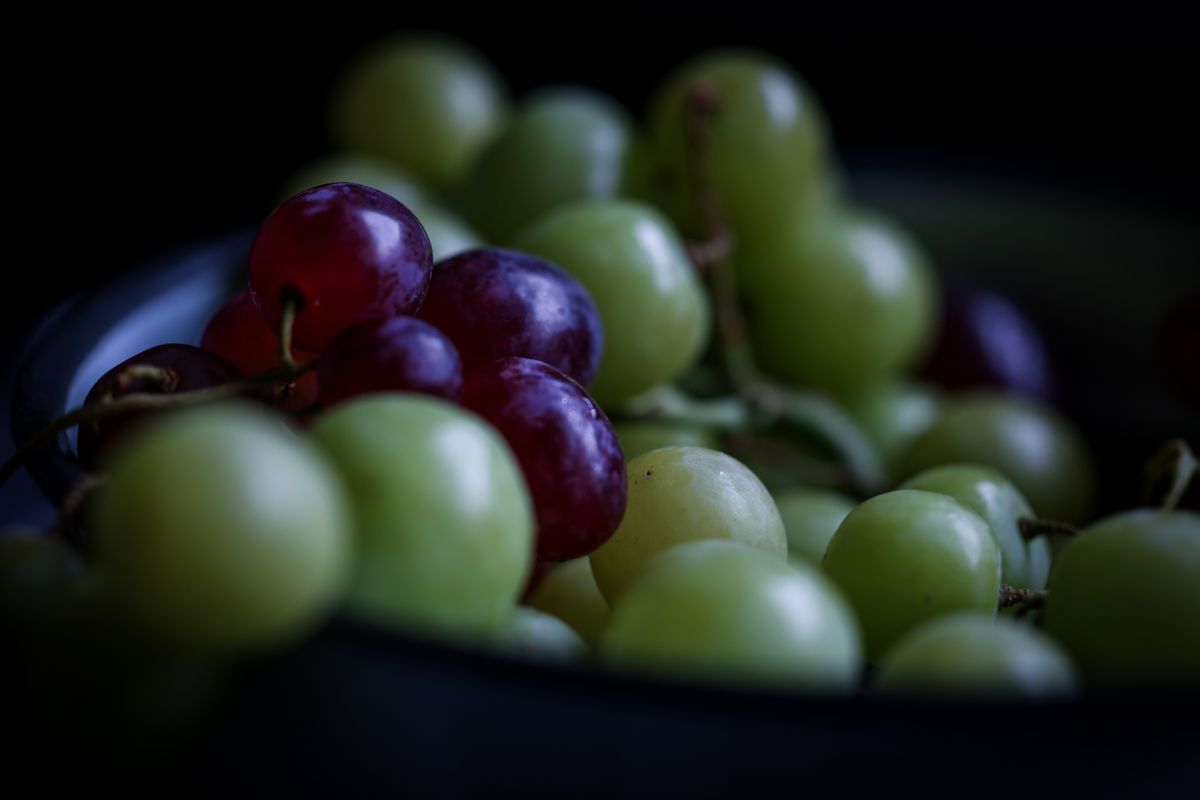
Grapes contain plant cells in both skin and flesh. Their cell walls contain cellulose alongside other substances.
Fibre is often grouped by how it behaves in water. Both types have a place in a varied diet, and most plant foods contain a mixture.
01
MIXES WITH WATER
Soluble fibre
Soluble fibre dissolves in water. Some forms create a gel, while some can be used by microbes in the large intestine.
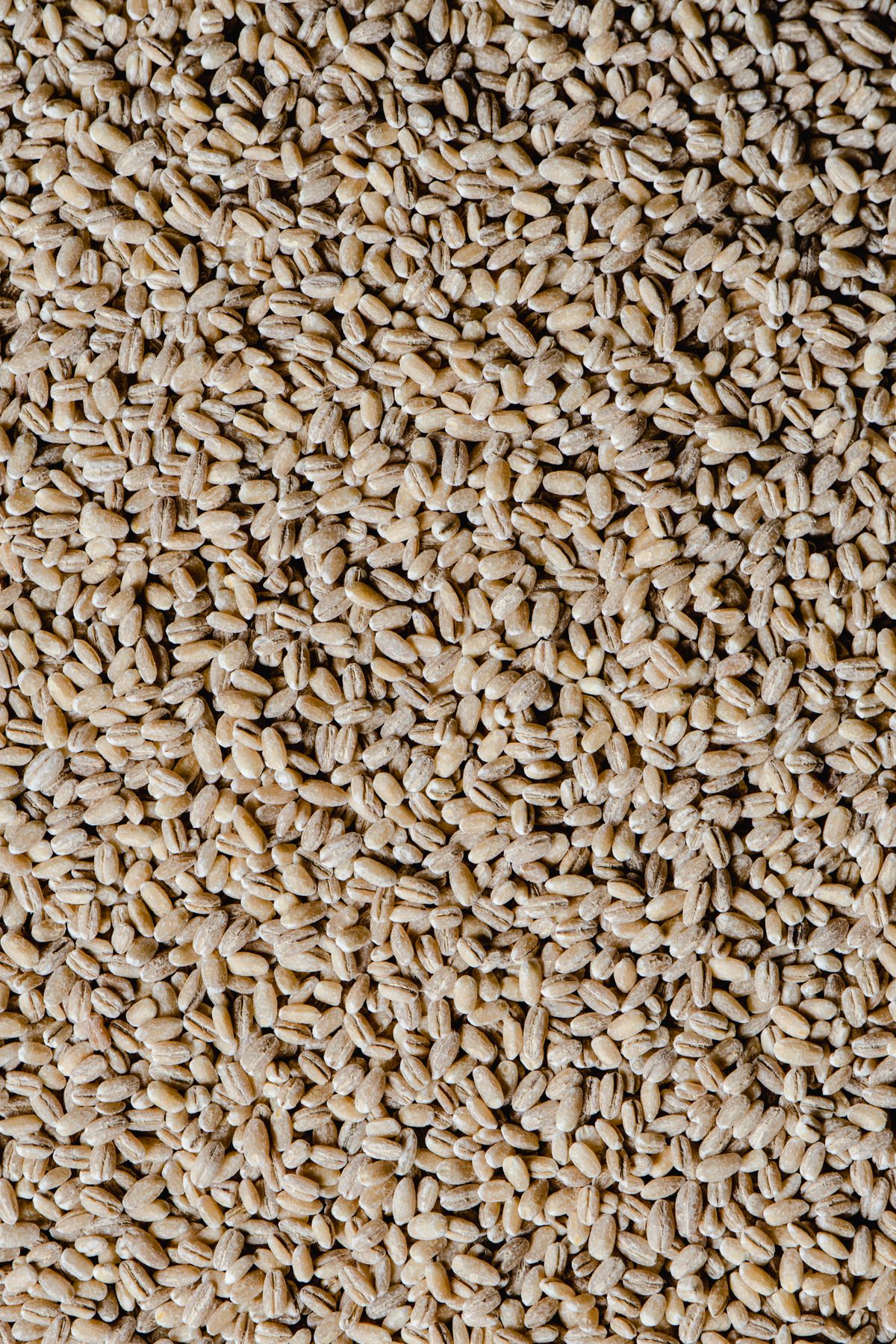
Look for: oats, barley, beans, lentils, fruit and vegetables. Oats contain beta-glucan, a type of soluble fibre. Barley contains beta-glucan too, but it contains gluten.
02
DOES NOT DISSOLVE IN WATER
Insoluble fibre
Insoluble fibre does not dissolve in water. It can add bulk to stools and help them move through the gut.
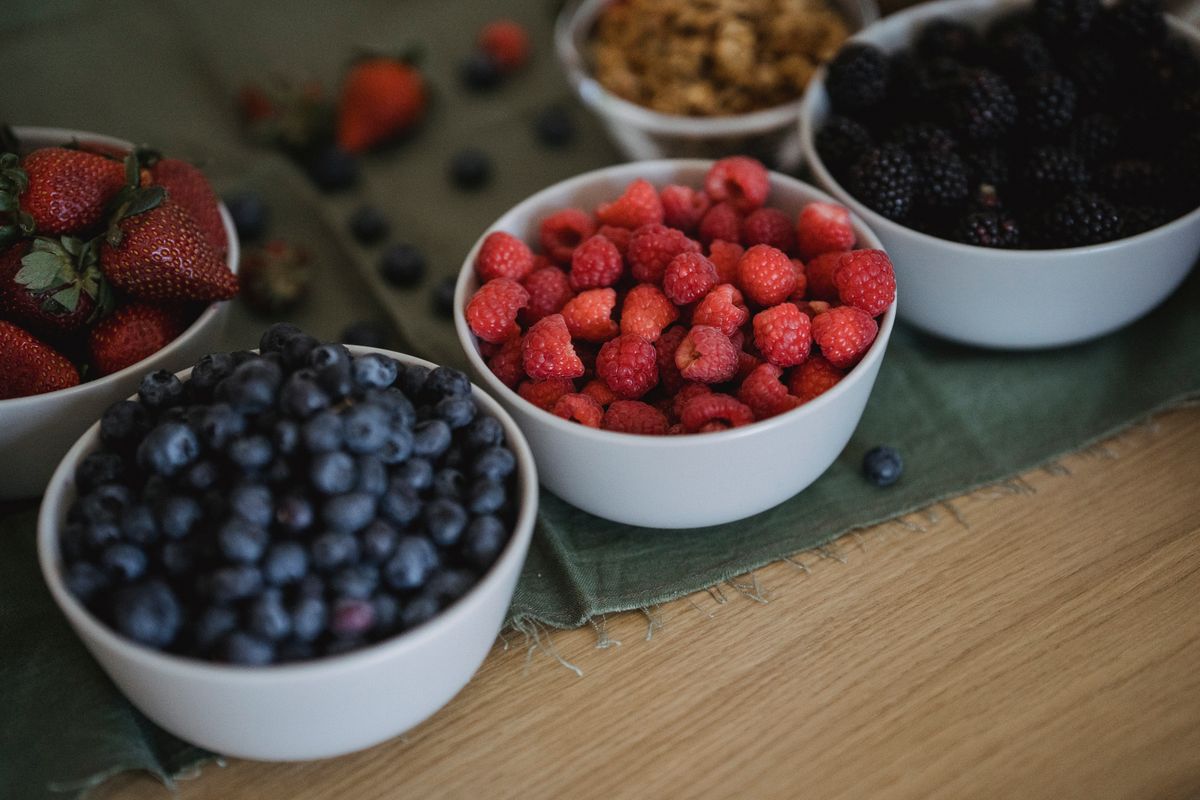
Look for: raspberries and blackberries, the edible skins of apples and pears, green beans, wholegrains, nuts and seeds. Plant cell walls contain cellulose, an example of insoluble fibre.
Oats and fruit: a useful comparison
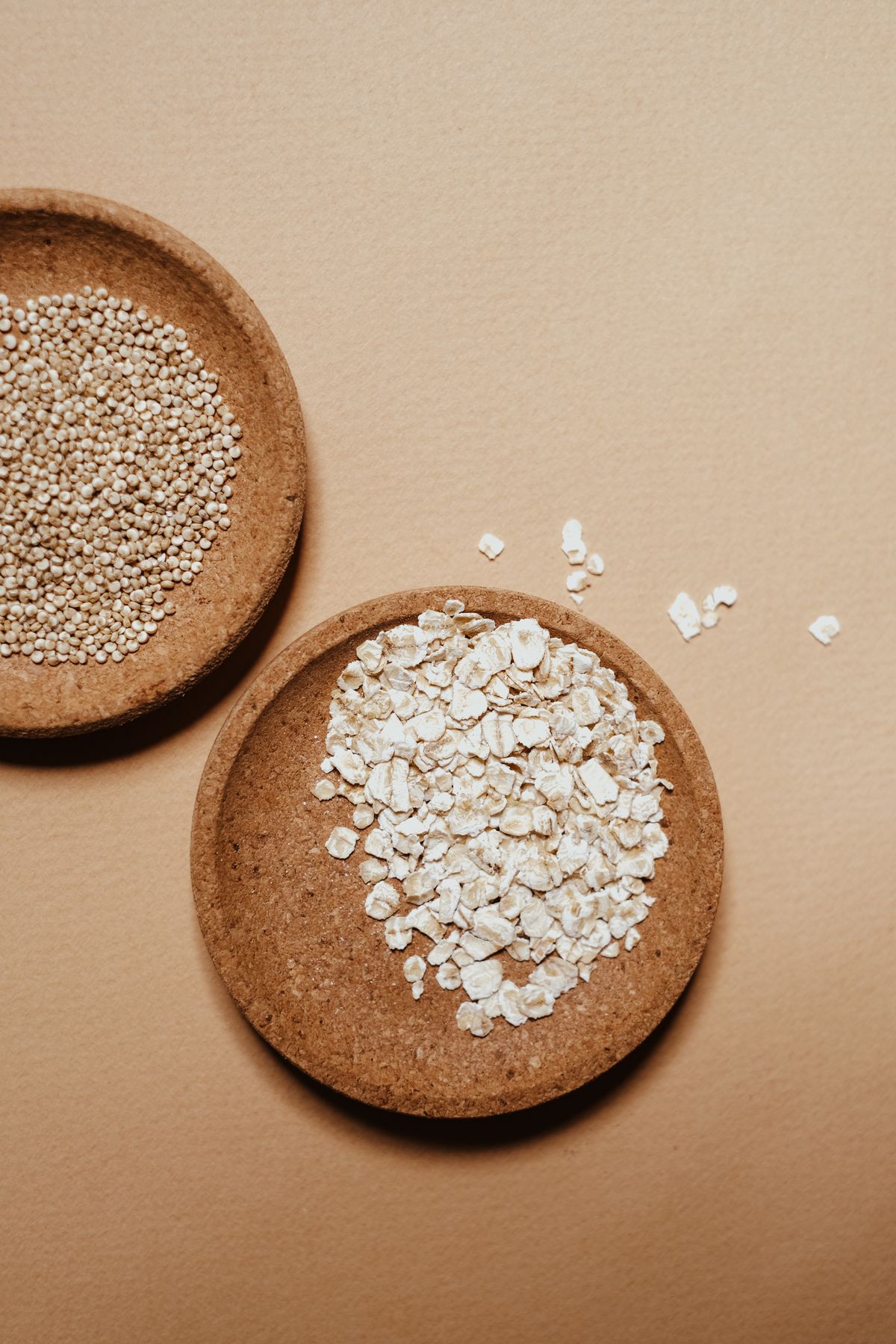
Oats contain both soluble and insoluble fibre. Their soluble fibre includes beta-glucan.
Berries and fruit with edible skins contain insoluble fibre as well as other types. Cellulose helps give their plant cells structure.
These groups are a useful starting point, but a fibre’s ability to be fermented by gut microbes cannot be predicted from solubility alone.
A note on psyllium: Psyllium is a seed husk containing mainly soluble fibre. It is different from cellulose, the insoluble fibre found in the cell walls of fruit and vegetables.
COLOUR, CRUNCH AND VARIETY
Fibre comes in so many delicious forms.
Choose from the foods you enjoy and build variety gradually. Different foods provide different kinds and amounts of fibre.
Fruit
Berries, apples, pears and grapes.
Vegetables
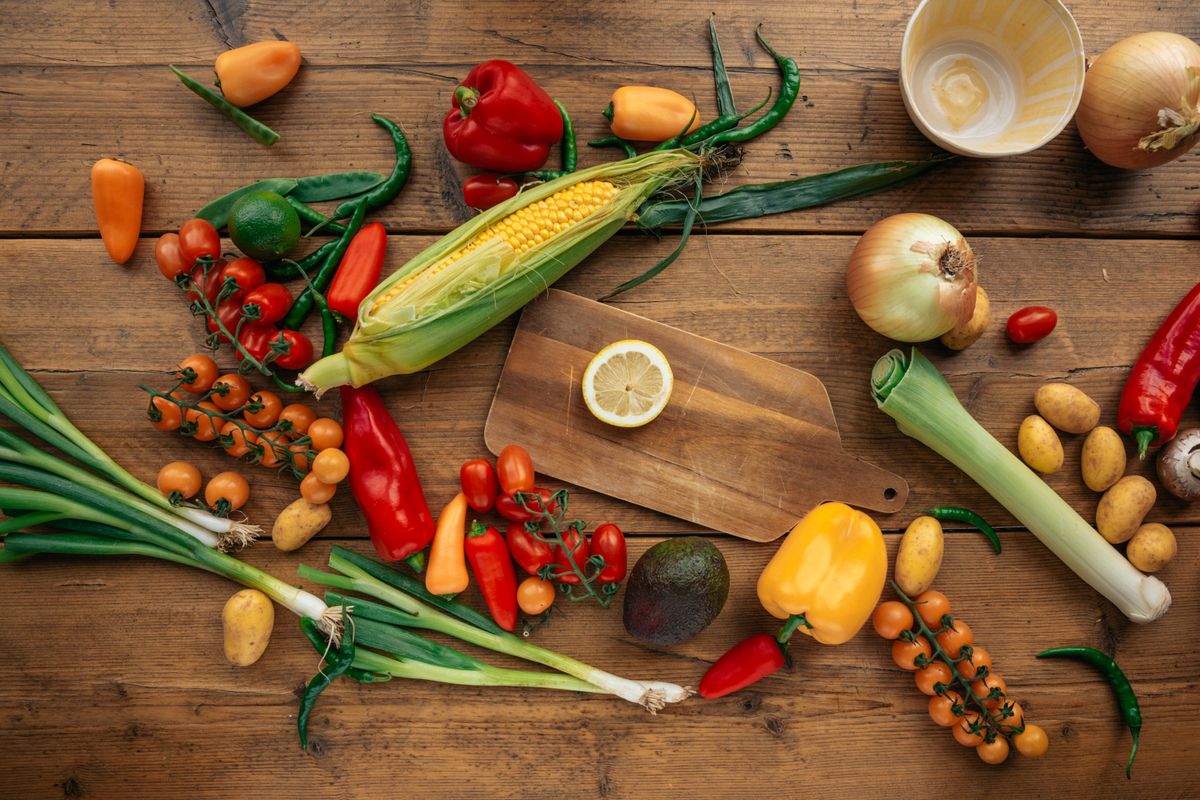
Broccoli, carrots, peppers and greens.
Beans
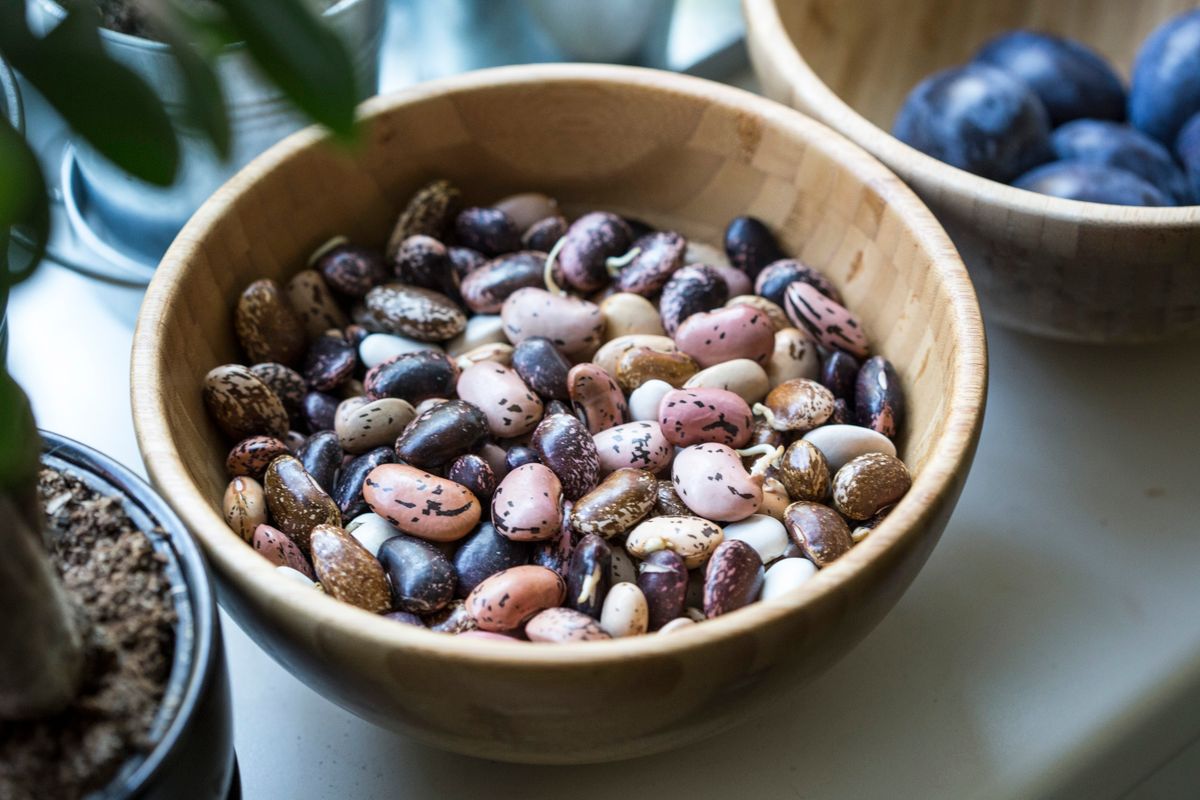
Butter beans, kidney beans and more.
Pulses
Try lentils and chickpeas in your meals.
Oats & wholegrains
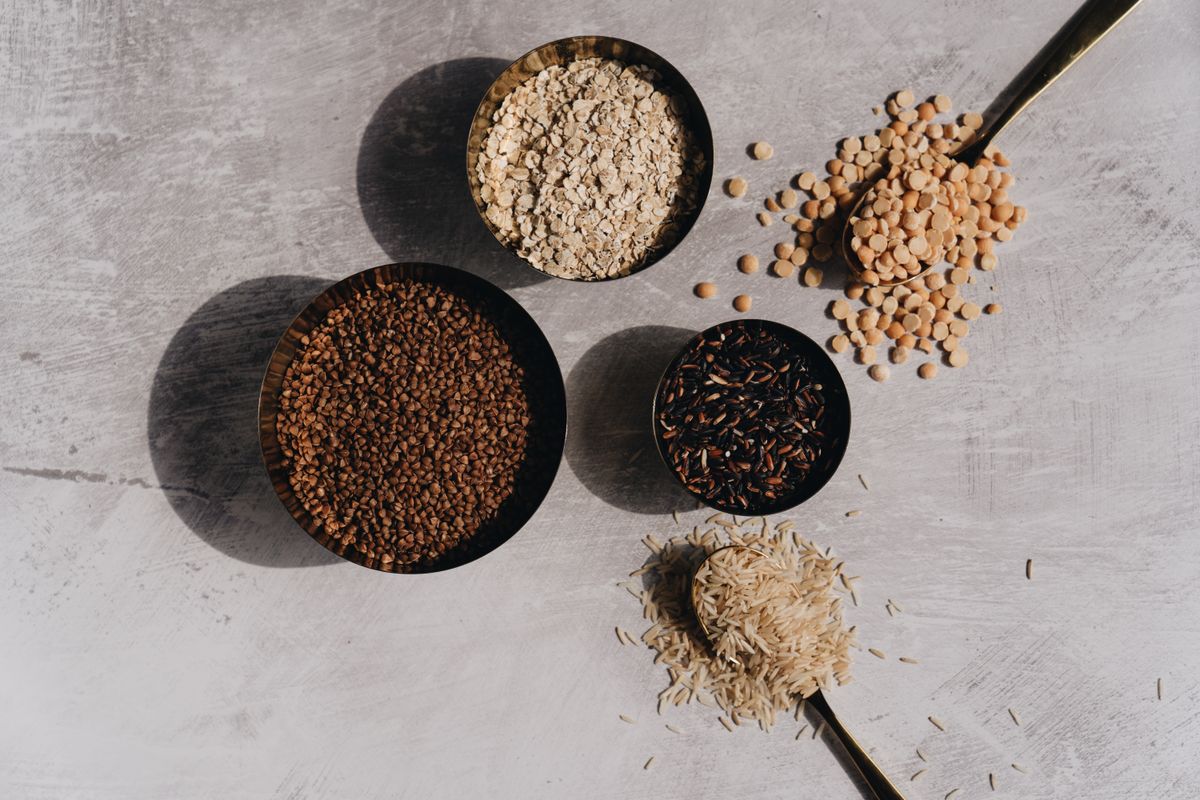
Porridge oats, brown rice and wholemeal breads.
Nuts & seeds
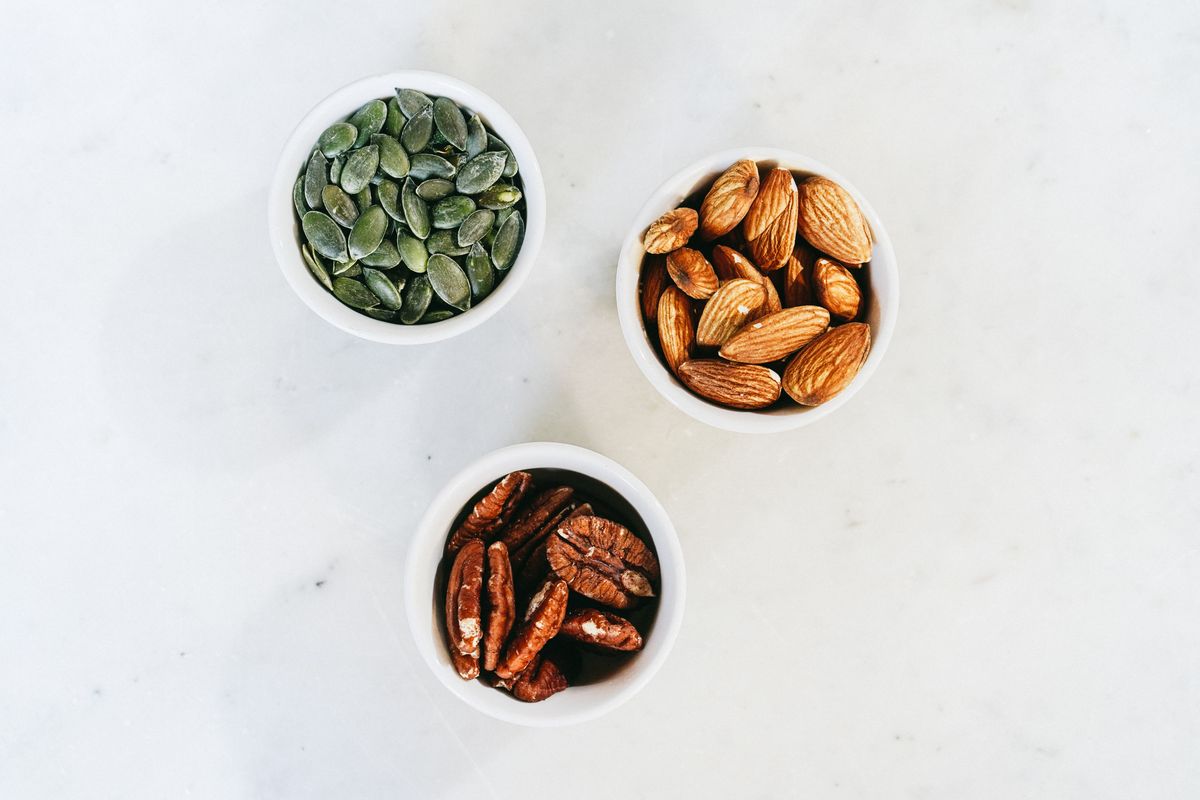
Almonds, walnuts and seeds.
Barley
Add to soups or stews. Barley contains gluten.
More fruit
Explore grapes, pears and apples, too.
Fruit, vegetables, beans, grains, nuts and seeds contribute different amounts of fibre. Check ingredients and personal dietary needs.
A HANDY FOOD GUIDE
Foods with more fibre
Here are some of the higher-fibre choices from the UK food composition tables. Choose the ones you enjoy and build variety across your week.
How to read these lists: The figures show grams of fibre per 100 g and per 80 g of the edible food. They are based on comparable AOAC fibre entries in the UK CoFID 2021 dataset. The lists compare selected common foods with available figures; other foods may be higher, and some foods have no comparable figure in the dataset. Values are averages and can vary with variety, ripeness and preparation.
FRUIT · FRESH
Top 10 fresh fruits
Raw, edible flesh; skins are included only where stated. Avocado is included as a fruit. Two fruits share tenth place.
Fresh fruit: grams of fibre per 100 grams and per 80 grams
Food and preparation
Per 100 g
Per 80 g
Strawberries, raw
3.8
3.0
Raspberries, raw
3.7
3.0
Blackberries, raw
3.4
2.7
Avocado, Hass, flesh
3.1
2.5
Kiwi, flesh and seeds
2.7
2.2
Pear, flesh and skin
2.7
2.2
Cherries, flesh and skin
1.9
1.5
Cantaloupe melon, flesh
1.8
1.4
Papaya, flesh
1.8
1.4
Blueberries
1.5
1.2
Clementines and other easy peelers, flesh
1.5
1.2
VEGETABLES · COOKED
Top 10 cooked vegetables
Boiled in unsalted water, except the baked sweet potato. Garden peas are included here as a vegetable. Cooking methods affect the amount per 100 g.
Cooked vegetables: grams of fibre per 100 grams and per 80 grams
Food and preparation
Per 100 g
Per 80 g
Garden peas, frozen and boiled
5.5
4.4
Sweet potato, baked
5.2
4.2
Sweetcorn, boiled on the cob
5.1
4.1
Green beans, boiled
4.1
3.3
Curly kale, boiled
3.5
2.8
Brussels sprouts, boiled
3.2
2.6
Okra, boiled
3.1
2.5
Swede, boiled
3.0
2.4
Broccoli, boiled
2.8
2.2
Carrots, boiled
2.8
2.2
BEANS, LENTILS & CHICKPEAS
Top five legumes
All weights below are after cooking. The first three and the lentils were cooked from dried; broad beans were boiled from fresh.
Cooked legumes: grams of fibre per 100 grams and per 80 grams
Food and preparation
Per 100 g
Per 80 g
Butter beans, boiled from dried
11.2
9.0
Red kidney beans, boiled from dried
11.1
8.9
Chickpeas, boiled from dried
10.6
8.5
Broad beans, boiled
9.0
7.2
Green or brown lentils, boiled from dried
7.4
5.9
Tinned pulses are convenient too: CoFID lists drained canned chickpeas at 7.1 g and canned red kidney beans at 6.8 g per 100 g. Cooked-from-dried and canned figures should not be swapped without checking.
Follow packet instructions to soak and cook dried beans properly. Canned beans are already cooked; red kidney beans must never be eaten raw or undercooked. Food Standards Agency: bean safety ↗
ANOTHER WAY TO ADD VARIETY
What about dried fruit?
Dried fruit has less water, so its fibre is more concentrated. A standard portion is 30 g, rather than 80 g.
Ready-to-eat dried figs: about 3.0 g fibre per 30 g
A usual adult portion of fresh fruit or vegetables is 80 g. Kidney beans, butter beans, chickpeas and lentils count as at most one portion of your 5 A Day in total; broad beans and green beans are treated as vegetables in government guidance. These examples are for variety, not a prescribed menu.
FIVE IS A STARTING POINT
Beyond five a day
The NHS recommends at least five portions of a variety of fruit and vegetables each day. Five is a starting point, not a ceiling. If it works for you, you can gradually enjoy more, and some people may choose to work towards ten portions.
What is a portion?
For an adult, around 80 g of fresh, frozen or tinned fruit or vegetables is usually one portion. Ten such portions would be roughly 800 g across a day. A portion of dried fruit is around 30 g; the NHS recommends having it with a meal to help protect teeth.
Kidney beans, butter beans, chickpeas and lentils count as a maximum of one portion a day in total, however much you eat. Green beans and broad beans are treated as vegetables in government guidance. Ordinary potatoes do not count towards five a day, though they can still provide fibre. A small glass of unsweetened juice or smoothie counts at most once; the NHS advises no more than 150 ml combined per day, with a meal.
What does the research say?
A 2017 review of observational studies linked higher fruit and vegetable intakes with lower observed rates of some outcomes, including cardiovascular disease and death, with associations continuing up to about 800 g a day. A later 2021 analysis found no clear further reduction in mortality above about five servings. Serving sizes can differ between studies. These findings show associations; they do not establish that a particular amount causes an outcome or that everyone needs ten.
More fruit and vegetables can be part of a balanced diet, alongside other foods you enjoy. Increase gradually and follow individual advice when needed.
What might ten portions look like?
One optional illustration using approximately 80 g per portion. Fresh, frozen and suitable tinned produce can all be used; amounts within a dish can be combined. Small steps towards more variety count too.
BREAKFAST · 2
80 g berries and 80 g sliced apple with porridge.
LUNCH · 4
80 g carrots, 80 g peppers, 80 g tomatoes and 80 g cooked chickpeas in or alongside a meal.
DINNER · 4
80 g broccoli, 80 g green beans, 80 g courgette and 80 g mushrooms across your meal.
This is an example, not a prescribed menu. Weights refer to the edible portions as served; the chickpeas are the one daily pulses portion. Adapt quantities, ingredients and pace to your appetite, budget and circumstances. NHS: what counts?
A BUSY COMMUNITY
Meet your gut microbes
Your digestive tract is home to a vast community of microscopic life. It includes bacteria, archaea and fungi, alongside viruses; most are found in the large intestine. Together, these communities are called the gut microbiota. You may also hear “microbiome”, which can refer to the community and its genes. Everyone’s mixture is different.
What do they do?
They use some of the food we cannot digest. Certain microbes break down some of the fibre that reaches the large intestine. This is called fermentation. It produces substances including butyrate, which is a source of energy for the cells lining the large intestine.
They interact with the body and with one another. Gut microbes interact with the immune system, and the wider community can compete with unwanted microbes for space and food. One microbe may also use a substance made by another. Researchers are still learning how these relationships affect each person.
Meals such as porridge with fruit, lentil soup and vegetable stew provide different kinds of fibre for this busy community. The response depends on the type of fibre, the rest of the diet and the microbes already present.
Some bacteria researchers study
A FIBRE-USER
Bifidobacterium adolescentis
A member of the Bifidobacterium group. It can use particular carbohydrates, including some inulin-type fibres. Researchers study this group’s response to different foods and fibres.
A BUTYRATE PRODUCER
Faecalibacterium prausnitzii
One of the bacteria that can produce butyrate, which helps provide energy to cells lining the large intestine. It can also use substances made by other microbes.
ANOTHER FIBRE-USER
Roseburia intestinalis
A gut bacterium that can break down certain carbohydrates and produce butyrate. Its presence and activity vary between people.
THE EVIDENCE SO FAR
What have researchers found?
A 2018 review of 64 studies found that some fibre supplements, especially specific inulin-related fibres and other prebiotics, increased the amount of Bifidobacterium detected in stool on average. It did not find a general increase in the variety of bacteria measured. Different fibres and different people may produce different results.
In a small 2020 trial, 25 adults with type 2 diabetes took an inulin-type supplement for six weeks. Researchers found an increase in bacteria identified as Bifidobacterium adolescentis. The study tested a supplement and did not show that everyone would respond in the same way.
In another small study in 2021, a higher-fibre diet did not produce a general increase in bacterial diversity over ten weeks. Research also explores links with ageing and autoimmune conditions, although more research is needed to understand these relationships. See the research links below for study details and limitations.
A DIFFERENT WAY TO THINK ABOUT VARIETY
What about 30 plants a week?
A 2018 observational project found that people who reported eating more than 30 kinds of plants a week tended to have a more diverse gut community than those reporting ten or fewer. It did not prove that eating exactly 30 plants caused better health, and 30 is not an NHS requirement.
Some people use it as a flexible idea for variety: fruit and vegetables, beans, lentils, wholegrains, nuts and seeds all count as plant foods. It is different from five or more portions of fruit and vegetables a day and from the adult 30 g of fibre a day guideline.
TWO OFTEN-CONFUSED WORDS
Prebiotics, probiotics and live cultures
Food for your existing gut microbes and foods containing live microbes are related ideas, but they are not the same thing.
01
Prebiotics: food for microbes
Prebiotics are particular substances used by selected microbes in ways that can benefit health. Some fibres have a prebiotic effect; not all fibre is a prebiotic. Inulin-type fibres occur naturally in foods such as onions, leeks and asparagus.
Enjoying different plant foods can add a range of fibres to meals, without needing to buy a supplement.
02
Live cultures: the microbes
Some foods, including yoghurt labelled “live” and some kefirs, contain live cultures. Fermentation describes how a food is made; it does not always mean live microbes remain in the finished food. For example, baking kills the microbes in bread, and some fermented foods are heat-treated.
“Probiotic” has a specific meaning: live microbes with a demonstrated health benefit in an adequate amount. Not every fermented food meets that definition, and effects vary by product and strain.
Yoghurt does not itself provide dietary fibre, but you might enjoy live yoghurt with oats and fruit. If you have an existing health condition or a weakened immune system, ask your doctor before taking probiotic supplements. Read the NHS guidance on probiotics ↗
SMALL CHANGES, YOUR OWN PACE
Start gently. Build gradually.
The NHS advises adults to aim for 30 g of fibre a day. If you eat less at the moment, there is no need to change everything overnight.
01
Begin where you are
Add a small serving of a fibre-containing food you enjoy, such as a spoonful of beans, some vegetables or oats.
02
Give yourself time
After a few days, try adding a little more or another source. Increasing too quickly can cause bloating or wind.
03
Keep it varied
Gradually build a mix of grains, pulses, fruit and vegetables, nuts or seeds across your meals, as suits you. Drink enough fluid unless you have been advised to limit it.
The NHS recommends at least five portions of a variety of fruit and vegetables each day. More can be enjoyed as part of a balanced diet; 30 g refers to total fibre from all suitable sources, not just fruit and vegetables.
MAKE IT WORK FOR YOU
Bring fibre into your meals
Use the three Golden Fuel recipe choices to find ideas that suit your day. Where fibre figures are shown, use them as estimates: amounts depend on ingredients, portions and preparation, and some values are still being checked.
Members can open the recipes, planner and shopping list using their Golden Fuel account.
FOR PEOPLE AVOIDING GLUTEN
Fibre without wheat
If you have coeliac disease, fibre can still come from a range of foods, including beans, lentils, vegetables, fruit, nuts, seeds, brown rice and quinoa.
People with coeliac disease need to avoid wheat, barley and rye. Choose oats labelled gluten-free; most people with coeliac disease tolerate them, but some do not. Check ingredients and cross-contact when preparing meals, and ask a dietitian or GP if you are unsure. Golden Fuel recipes need their ingredients and preparation checked individually before being described as gluten-free.
 01