Bake in a parcel
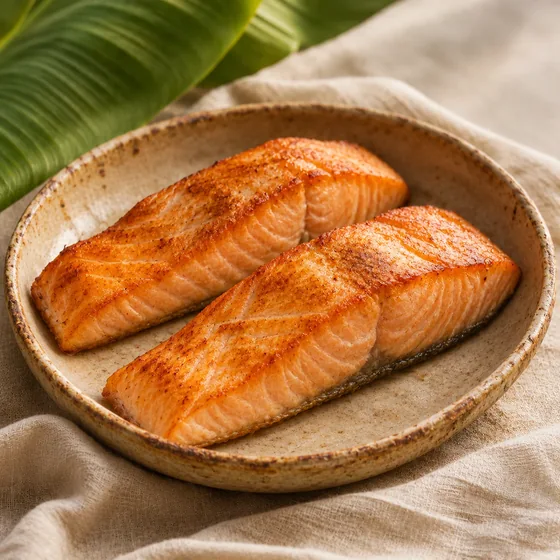
Wrap a fillet in foil or baking paper with lemon and herbs; cook according to the pack or recipe.
FREE FOOD GUIDE · FISH
Salmon is an oily fish that provides protein, long-chain omega-3 and vitamin D. Fresh, frozen and tinned salmon can all be useful choices.
In your kitchen
Wrap a fillet in foil or baking paper with lemon and herbs; cook according to the pack or recipe.
Cook in a little oil, turning as needed until the fish is cooked through.
Some fillets can be cooked from frozen. Follow the packet instructions.
Tinned salmon is already cooked. Add it to a sandwich, jacket potato or fishcakes; check for bones.
Frozen and ready-prepared ingredients can make cooking easier when your hands are sore or stiff.
Nutrients in a portion
Explore some of the nutrients in this example.
Helps the body grow and repair itself and maintain muscle.
Read the nutrient guideSalmon provides the long-chain omega-3 fats EPA and DHA.
Read the nutrient guideApprox. 102% of 10 µg per day. Food alone may not meet vitamin D guidance; see the vitamin D guide.
Helps the body absorb calcium and supports bones and muscles.
Read the nutrient guideApprox. 37% of 75 µg (men) per day; 47% of 60 µg (women) per day.
Supports normal immune function and helps protect cells from damage.
Read the nutrient guideApprox. 233% of 1.5 µg per day.
Helps keep the nervous system and red blood cells healthy.
Read the nutrient guideApprox. 16% of 3,500 mg (adults aged 19–64) per day.
Helps the body control fluid balance and supports normal muscle function.
Read the nutrient guideProtein helps maintain muscle. Calcium and vitamin D work together to support bones; bone health matters throughout adulthood, including after menopause.
A practical tip: The NHS advises adults to consider a daily 10 microgram vitamin D supplement in autumn and winter. Some people need year-round advice; see the vitamin D guide.
Example: 140 g of salmon, farmed, flesh only, baked. Calculated from UK CoFID 2021, food code 16-359; values vary by product and preparation. Percentages are approximate UK adult population-reference comparisons, not personalised advice or food-label values. Needs differ in pregnancy, breastfeeding and some medical conditions.
From ingredient to meal
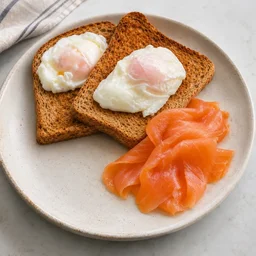
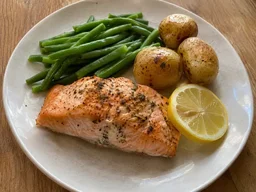
4 recipes in the Golden Fuel member collection. Matches can include optional ingredients.

Keep raw salmon chilled and follow the use-by date and storage instructions, or freeze it before the use-by date. Defrost in the fridge unless the pack says to cook from frozen. Cool cooked leftovers, refrigerate within 2 hours and eat within 48 hours or freeze.
Browse the full Food Guide A–Z