Try a breakfast, a vegetarian lunch and a chicken dinner, with ingredients, cooking steps and a clear explanation of their nutrients. No sign-in or payment needed.
Open a recipe below to see its ingredients, method and nutrition. These are individual meal ideas, rather than a complete daily menu; choose other food and drinks to meet your needs. Illustrative serving images; use the ingredients and quantities in each recipe.
Breakfast
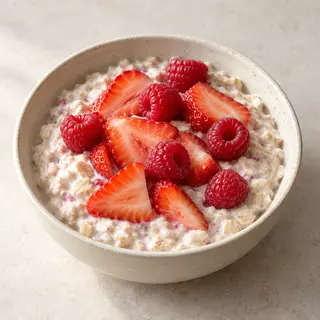
Berry overnight oats with Greek yoghurt
5 minutes preparation + overnight chilling · Makes 2 servings
Creamy oats prepared the night before, finished with fresh strawberries and raspberries.
Ingredients
100 g porridge oats
200 g plain 0% fat strained Greek yoghurt
200 ml semi-skimmed milk
100 g fresh strawberries, hulled weight
60 g fresh raspberries
Allergens Milk and oats (a cereal containing gluten). Check ingredient labels and any substitutions.
Method
Mix the oats, Greek yoghurt and milk in a bowl. Divide equally between two clean jars or covered bowls.
Cover and refrigerate overnight.
Before serving, wash the berries, remove the strawberry stalks and slice the strawberries. Divide the fruit equally between the two bowls.
Stir and serve cold. Add a little water if you prefer a looser texture.
Storage Keep covered in the fridge and enjoy the next morning. Follow the shortest use-by and opened-pack instructions on your milk and yoghurt.
What this meal provides
Protein: the Greek yoghurt and milk contribute protein, which your body uses to maintain and repair tissues, including muscle.
Fibre: the oats and berries contribute fibre, which helps keep your bowel working normally.
Calcium: the milk and yoghurt contribute calcium, which helps maintain bones and teeth.
The sugars shown include naturally occurring sugars in the milk, yoghurt and berries.
Nutrition per serving
Energy
301 kcal
Protein
19.1 g
Carbohydrate
42.4 g
Fat
4.6 g
Saturates
1.5 g
Total sugars
12.4 g
Fibre
6.4 g
Salt
0.21 g
Estimated from the quantities below. Brands, portions and substitutions change the figures.
Estimated per portion from the stated ingredient quantities and published UK product nutrition data. Brands, fruit varieties and portion sizes will change the figures.
Calculated using plain 0% fat strained Greek yoghurt and fresh strawberries and raspberries. Greek-style yoghurt, other fat levels or a different berry mix can change the figures.
AI-generated serving suggestion; bread is served separately and is not pictured.
Lunch
Butternut squash and ginger soup
About 45 min · Makes 2 servings
Roasted butternut squash and fresh ginger blended with a little light coconut milk, served with wholemeal bread.
Recipe status: Cooking instructions and timings are a draft and await kitchen testing. Nutrition figures are estimates.
Ingredients
600 g butternut squash, peeled and deseeded weight
120 g onion, peeled weight
15 g fresh ginger, peeled weight
6 g garlic, peeled weight
10 ml olive oil (2 teaspoons)
120 ml light coconut milk
450 ml water
2 slices wholemeal bread (80 g total)
Black pepper, optional
Allergens Wheat and barley (gluten) in the reference bread. Check bread and coconut milk labels and all substitutions, including any cross-contact advice.
Method
Heat the oven to 200°C / 180°C fan / gas 6. Cut the peeled, deseeded squash into roughly 2 cm pieces and cut the onion into wedges.
Toss the squash and onion with the olive oil and spread on a roasting tray. Roast for 25–30 minutes, turning once, until the squash is tender.
Peel and finely chop or grate the ginger and garlic. Add them to the tray for the final 5 minutes, taking care they do not burn.
Transfer the vegetables to a saucepan with the water. Bring to a gentle simmer for 5 minutes, then remove from the heat. Allow to cool slightly before blending carefully until smooth; follow your blender’s instructions for hot liquids.
Stir in the coconut milk and warm gently until hot throughout. Add black pepper if desired, then divide between two bowls and serve each with one slice of wholemeal bread.
Storage Cool leftover soup and refrigerate within two hours; eat within 48 hours and follow any shorter ingredient storage instructions. Reheat until piping hot throughout.
What this meal provides
Butternut squash provides fibre and beta-carotene, which the body can convert to vitamin A. The wholemeal bread also contributes fibre. This lunch contains a modest amount of protein; an additional protein-rich side is not included in the figures below.
Nutrition per serving
Energy
325 kcal
Protein
8.6 g
Carbohydrate
47.5 g
Fat
9.2 g
Saturates
4.3 g
Total sugars
19.9 g
Fibre
8.6 g
Salt
0.45 g
Estimated from the stated ingredients, with the whole recipe shared equally between two. Brands, portions and substitutions change the figures.
Calculated from the stated edible ingredient weights and UK product nutrition tables; brands and portions vary.
Uses water instead of stock, light coconut milk, one 40 g slice of wholemeal bread per person and no added salt. The optional black pepper and other sides are not included in the calculation. Cooking losses and cooked yield were not measured.
Spiced chicken, black beans, peppers and onion over brown rice, with tomatoes, avocado, citrus juice and yoghurt.
Kitchen testing: Jo has tested this recipe. Nutrition figures are estimates based on the ingredients.
Ingredients
130 g skinless chicken breast
70 g tinned black beans in water, drained
80 g red pepper
50 g onion
55 g brown rice (dry)
80 g fresh or cherry tomatoes
40 g avocado
10 g lemon or lime juice
4 g dried spices and herbs
5 g rapeseed oil
30 g 0% fat Greek-style yoghurt
Allergens Milk. Check every packet and any substitution. Stock, sauces and seasonings may add allergens; also check cross-contact advice.
Method
Cook the brown rice according to the packet instructions. Slice the chicken, pepper and onion into thin strips and toss with the listed dried spices.
Stir-fry in the oil for about 8 minutes, or until the chicken meets the temperature check below and the vegetables are tender. Add the drained beans for the last 2 minutes and heat through.
Serve with the cooked rice, chopped tomato, avocado, citrus juice and a spoonful of yoghurt.
Cook poultry, pork and minced meat all the way through. Check the centre with a clean food thermometer: 75°C for at least 30 seconds (or 70°C for 2 minutes). Browning alone does not show that it is cooked.
What this meal provides
Black beans add plant protein and fibre, and red pepper contains vitamin C. Yoghurt contains calcium. The rice, chicken, beans and vegetables illustrate a mix of food groups rather than a single-food approach.
Nutrition per serving
Energy
599 kcal
Protein
45.5 g
Carbohydrate
62.1 g
Fat
15.9 g
Saturates
2.8 g
Total sugars
12.1 g
Fibre
13 g
Salt
0.28 g
Estimated from the quantities below. Brands, portions and substitutions change the figures.
Estimates use the stated ingredients and UK food composition and reference-label data. Brands and portions affect the figures.
The estimate uses a salt-free reference blend for the spices. A commercial fajita seasoning may contain added salt.
Free sugars, calcium and vitamin D are not calculated for this serving. Total sugars include naturally occurring sugars.
Estimated ingredient cost: £2.27 per serving. Based on provisional September 2026 ingredient estimates; actual costs may differ. Cooking energy and delivery are excluded.
Nutrition values are estimates, not laboratory measurements. Original recipe references were checked on 27 October 2026; soup ingredient references were checked on 2 November 2026. Total sugars include naturally occurring sugars.